

Walk into any park on a humid Tampa evening and you can feel it. The clack of aluminum bats at Skyway, the squeak of indoor court shoes in Westchase, the sudden roar when a three-pointer drops in South Tampa. Recreational leagues here are serious about fun and proud of their teams. Jerseys do more than identify sides of a bracket. They create belonging, make sponsors visible, and give players a reason to show up early and stay late. When that jersey carries a clean, durable embroidered best tampa promotional products crest, the whole experience steps up a level.
I’ve helped outfit youth baseball in Brandon, adult soccer on the Riverwalk, and coed volleyball from downtown beach courts to Carrollwood rec centers. I’ve seen how the right embroidery choice makes laundry easier, saves money, and gives teams a look that lasts past the championship photo. If you’re weighing screen print versus sewn twill versus embroidery for your league in Hillsborough County, it pays to know how embroidery behaves in heat, rain, and relentless wash cycles. It also helps to partner with a shop that knows Tampa fields and the way leagues here actually operate. Tanners embroidery has served plenty of squads from Brandon to Town ‘N Country, and there are reasons they and other reputable embroidery Tampa shops have a following among coaches and captains who don’t have time to babysit uniform orders.
Why embroidery hits different on a Tampa jersey
A patch of thread can do things ink cannot. Thread catches light, sits off the surface, and reads clearly from the sidelines even after a summer of fence slides and sand. Embroidery resists the peeling and cracking that heat-pressed vinyl fights by August. For crest-sized elements, player initials, and sponsor icons near the heart or on a sleeve, embroidery simply looks more professional.
The subtlety matters. A clean satin stitch around a shield logo tells parents you run a real program. For adult leagues, an embroidered chest mark makes a rec team feel like a club. It also affects behavior. Players tend to take care of embroidered garments, because the jersey looks like something worth keeping. That improved care extends the life of the uniform and reduces replacement costs mid-season.
There are limits. Full-front oversized graphics with gradients are not embroidery’s home turf, and the number on the back is almost always better screen printed or heat pressed. The sweet spot for stitching is two to four inches wide on lightweight performance knits, up to five or six inches on heavier fabrics. That range covers almost every primary crest, shoulder patch, and sponsor lockup you will want.
The practical realities: heat, moisture, and weekly washing
Tampa leagues don’t get dry seasons. The months change the timing of the thunderstorms, not the presence of humidity. An embroidered jersey must fight sweat, sunscreen, bug spray, and the occasional Gatorade spill. That is where thread choice and backing materials matter more than the design mockup.
Polyester thread should be your default for performance wear. It resists bleach, holds color in UV, and doesn’t shrink like cotton. Rayon has a soft luster that looks great on corporate polos, but it is less forgiving in the trunk of a car that hits 110 degrees mid-afternoon. If you coach travel ball or run multiple teams, ask your decorator to spec poly thread for anything that will see sun-soaked doubleheaders or beachside pickup.
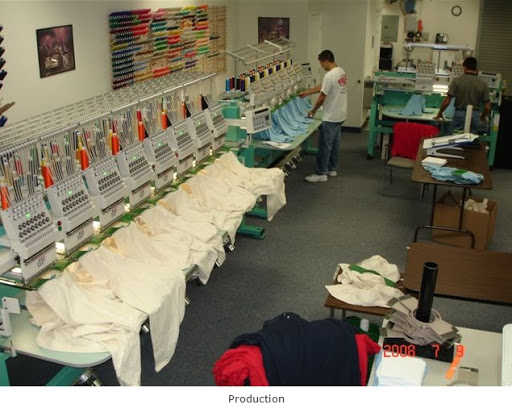
Under the stitches, stabilizer keeps the design crisp. On thin jerseys, a light cut-away stabilizer in the crest area prevents puckering and floppy edges after five or six washes. Tear-away is faster for the shop and works fine on stout cotton tees, but performance polyester jerseys in Tampa deserve cut-away. Ask for a swatch. If you can tug the fabric around the logo and it doesn’t ripple, the shop got it right.
I once worked with a Westchase soccer league that had to re-order midseason because numbers looked great but chest crests sagged after July rain games. The fix was simple: switch to a bonded poly twill emblem for the crest with an embroidered edge and heat-fusible backing. The twill gave the design a stable base, the edge thread sealed it, and the crest survived both weather and washer. The budget only went up by a few dollars per jersey, and the re-order stopped being a problem.
Design that reads from the sideline
An embroidered crest needs to do three jobs. It must identify the team at a glance, promote the sponsor if present, and complement the player name and number, not compete with them. That means restraint. Fine scripts with thin tails tend to break up in thread. Intricate textures get muddy at three inches.
You can protect clarity with small choices. Simplify a five-color logo to three for the garment. Increase the stroke weight on delicate lines so you have at least a 0.5 to 0.7 millimeter stitch path. For small type under a crest, avoid serif fonts entirely. A clean sans-serif at 0.2 inches high will stay legible. When a sponsor insists on a complicated mark, consider a stitched border around a twill appliqué so you get the sponsor’s full-color asset printed on twill, then locked down with embroidery. You keep brand integrity without forcing the needle to do work it was never meant to do.
Placement shapes how fans see the jersey. Traditional chest-left placement still dominates, but Tampa’s sun rewards high contrast near the collar where sweat stains are less noticeable. For youth baseball, a two-and-a-half inch crest on the left chest with a one-inch player embroidery number on the right shoulder panel keeps the balance. Adult basketball tanks look sharp with a four-inch center crest and printed number below, though this requires coordination so the embroidery hooping does not stretch the armholes. A shop experienced with embroidery Tampa orders will hoop on specialty frames that protect the edges of sleeveless garments.
Names and numbers: when to stitch and when not to
Stitched names on the back look incredible on hockey sweaters and heavy cotton baseball pullovers. On lightweight moisture-wicking jerseys, a fully embroidered name tends to weigh down the fabric and can itch if not properly backed with soft tape. Most leagues in Tampa opt for heat-pressed or screen printed Tanners Inc embroidery names and numbers, and reserve embroidery for the crest, sleeve patches, and sponsor icon. That mix keeps costs sane and performance high.
There are exceptions. Coaches polos, manager jackets, and league director apparel benefit from embroidered names. If you run the Tampa Palms basketball league or coordinate a Brandon softball tourney, put your name stitched over the right chest on polos and light quarter-zips. It is durable, avoids the shine of vinyl, and carries authority in the gym. For top-of-the-roster awards or all-star kits, a chain-stitch script across a vintage style jersey looks fantastic, but plan ahead. Chain-stitch often requires a different machine and lead time.
Working with a local decorator
You can order team kits online, but Tampa’s leagues get real value from a local shop that can meet a coach at the field, match colors in natural light, and solve problems when half the team registers late. Tanners embroidery has built a reputation for helping teams in Brandon, Riverview, and Ybor hit their dates without sacrificing quality. A good local decorator also understands that many leagues have rolling additions. A five-piece add-on shouldn’t blow your budget or get pushed behind a 300-piece corporate order.
Ask a shop for proof they have handled your garment type. Embroidering a mesh baseball button-down requires different hooping than a smooth soccer jersey. If a shop can show you a finished sample from a Hillsborough adult league or a youth team in the area, you know you are not the guinea pig. Shops focused on embroidery brandon fl and greater embroidery Tampa projects will typically keep thread stock for common local team colors. That matters when you need a late-season replacement and want the blue to match the original Pantone within a hair.
Geography helps in other ways. Pickup and delivery save you time. If a shop can run sample fittings on a Tuesday practice night at Bloomingdale Sports Complex, you will get sizes right in one pass instead of three. Local knowledge also helps with sponsor expectations. Restaurants, HVAC companies, and small clinics that back teams in Tampa like to see their logo treated respectfully. A decorator who already has the vector files and thread maps from last season can re-run the sponsor mark without a new setup fee.
Budget math that actually holds
Teams often start with a number pulled from a national site and forget the hidden costs. Embroidery pricing has three major components: digitizing the design into stitch data, per-location stitch count, and garment handling. You can control all three.
Digitizing is a one-time cost for a design. For most three-inch crests, expect a range of 30 to 80 dollars depending on complexity. Once it is done, you can run it on every jersey for years. Shops sometimes waive digitizing with a minimum order. If you plan to outfit multiple seasons or age divisions, pay for proper digitizing and own the file. You will save real money in year two and beyond.
Stitch count drives per-piece cost. A three-color crest at 10 to 12 thousand stitches will land in a comfortable price bracket. Add metallic thread or dense fills and you will pay more. For sponsors, you can often reduce stitches by using an outline rather than a filled block or by pairing embroidery with a small printed panel. One boy’s baseball team in Brandon switched a filled rectangle sponsor block to outlined letters last spring and dropped 3,000 stitches. At 1 to 2 dollars per thousand stitches, promotional products Tanners Inc that saved more than a pizza night across the 40-piece run.
Handling costs increase when the shop must re-hoop weird placements, sew on sleeves that are already assembled tightly, or work with flimsy fabrics that require extra stabilizer. Choose garments that cooperate. A midweight performance jersey designed for decoration might add two dollars at wholesale but save two dollars in handling. On a 60-piece order, the net cost is a wash, and you get a better-wearing kit.
Shipping is the last surprise. Keep it local if schedules are tight. A rainout can give you two days back, but FedEx does not care about rainouts. Picking up finished sets at a shop in Tampa or Brandon avoids overnight charges, and if there is a defect, you can get it fixed before Saturday.
Fabric choices that play nice with stitches
Uniforms have evolved. Most Tampa leagues are in moisture-wicking polyester for gameplay. That fabric handles embroidery well if you respect its limits. Avoid dense, fully filled designs on light 3-ounce knits. The fabric will tunnel and pucker. Choose cleaner, open shapes for the primary crest. If the league insists on a heavy fill, consider an embroidered patch applied with a heat press. That gives the design a stable base while keeping stitch density from distorting the garment.
Cotton blends for off-field tees and warmups are forgiving and take embroidery beautifully. A cotton-poly 60/40 tee can support a larger crest without fuss. For hoodies, pay attention to fleece pile and seam placement. A crest that bridges a seam will not sit clean. Move the placement a half inch toward the center or choose a left-sleeve hit for the league mark and keep the front for player numbers in print.
Sublimated jerseys, common in some adult leagues, present a different puzzle. The fabric often has a dye-sublimated design baked in. You can still embroider, but watch for dye migration where heat from the machine’s foot and traction can pull color into light threads. Blocker threads help, and an experienced shop will test a swatch. If your team plans full sublimation, make embroidery accents small and strategic. Let the sublimation carry the loud graphics and the embroidery carry the prestige details.
Lead times and the rhythm of a Tampa season
Recreation seasons here stack up. Spring baseball kicks off while adult soccer wraps a winter session. Then summer basketball and beach volleyball hit stride just as fall ball begins signups. A uniform plan that works in January can fall apart in May if you don’t anticipate bottlenecks.
Digitizing and sampling usually take three to five business days. Ordering blanks, two to seven days depending on distributor stock. Embroidery production for 30 to 80 pieces should be scheduled at one to two weeks in regular season. If a shop says they can do it faster, ask what gets compromised. Rush jobs can be done cleanly, but they require planning and sometimes a narrower range of garment colors that are stocked locally.
Rain delays, school events, and family travel will shift your roster at the last minute. A smart decorator will set aside a handful of blanks in common sizes so add-ons don’t require a new wholesale order. When working with a shop like Tanners embroidery or another established embroidery Tampa provider, request a small held inventory for your team. Five extra blanks in youth medium and large can save a coach a headache in week three.
Keeping sponsors happy without hijacking the jersey
Local sponsors want visibility, and you need their support. The trick is to give them prominence without turning your team into a roadside billboard. Embroidery gives you a tasteful lane for sponsor marks, especially on sleeves or above the hem. A two-inch embroidered sponsor icon on the sleeve offers visibility in photos and in handshakes after games, while leaving the front for the team identity.
If your sponsor’s logo has delicate gradients or shadows, use a hybrid solution. Print the sponsor art on a small twill or canvas patch, then apply it and finish with an embroidered border. That approach preserves the brand’s look and gives you the tactile finish that pairs with your embroidered crest. It also makes mid-season sponsor swaps easier. You can remove and replace patches more cleanly than you can unpick thousands of stitches.
I have seen sponsors lean in when they feel cared for. One Tampa HVAC company doubled their contribution after being offered a dedicated sleeve placement stitched cleanly in their brand PMS color. The league got better jerseys. The sponsor got new business from parents who saw the name weekly. Embroidery helped both, not by shouting, but by showing quality.
Care instructions that real families will follow
An embroidered jersey is tough, but you can ruin it with heat and neglect. Families don’t need a lecture. They need instructions that fit a busy week. Include a one-card care note in each kit bag. Keep it simple.
- Cold wash with similar colors, inside-out. Avoid fabric softeners. Hang dry or tumble low. High heat is the enemy. Do not iron directly on embroidery. If needed, press from the inside with a towel barrier. Rinse sunscreen and bug spray residues sooner than later. They stain when baked in a trunk. For snagged threads, trim flush. Do not pull.
Those five steps reduce failures by most of what I see in midseason repair visits. The “inside-out” step protects stitch edges from abrasion. The “no high heat” rule keeps stabilizer from warping and threads from going shiny. And the last two steps address Tampa-specific problems: chemical residues and accidental snags from fences or Velcro in duffel bags.
The visual identity beyond the crest
Team spirit is not just a chest logo. Sideline caps with embroidered marks unify a dugout. Coaches in matching embroidered quarter-zips signal organization at tournaments. Warmup shirts with subtle monograms boost perceived professionalism. A small budget line for extras stretches far with embroidery, because the per-piece setup is already handled.
I like to think in tiers. Tier one is the game jersey crest. Tier two is a cap or beanie for weather swings. Tier three, if funds allow, adds staff polos or pullovers with embroidered names and the league mark. Once you own the digitized file, adding these becomes easy. You can roll them out mid-season as rewards. I have handed embroidered caps to youth players after a playoff-clinching win, and the look on their faces tells you why it matters.
Fit sessions that avoid returns
Sizing nightmares cost time and goodwill. You will always have a few edge cases, but you can shrink the problem drastically with a 30-minute fit session. Bring a limited size run to a practice. Have players try on between drills. Note each size on a roster sheet in pen, not memory. For remote teams or travel squads, drop sample kits with captains for a weekend.
If your decorator is local, ask them to attend a short session. A seasoned embroidery Tampa rep will spot issues you won’t, like a keeper jersey with padded elbows that complicate sleeve embroidery, or a youth player who needs a different cut due to shoulder mobility. The small adjustments you make at that moment eliminate rework and protect the schedule.
Edge cases and how to handle them
Every league has outliers. Goalkeepers want customized long sleeves. A player wants a nickname on the chest. A late sponsor arrives after the jerseys are done. You can say yes to most of it without derailing production, but set boundaries.
Long sleeves with padding should avoid dense embroidery on the forearm to preserve flexibility. Place sponsor marks on the upper arm or the chest. For nicknames, keep them uniform in typeface and size, and offer them only as a pre-order option to avoid one-off machine downtime. Late sponsors can be accommodated with add-on patches or a second placement on a cap or practice tee. Communicate the cost transparently. Most families understand when the rules are clear.
One coach in Brandon needed inclusive solutions for sensory-sensitive players. The fix was soft backing tape over the embroidery interior, applied after stitching. It made the crest practically unnoticeable from the inside and solved the itch complaint. Once the shop knows to add the soft tape for specific jerseys, they can tag those garments and keep a note on file for future seasons.
Why local experience wins on game day
You can buy threadwork anywhere, but context makes a difference. Tampa leagues play under bright sun, on slick grass after midday storms, and in gyms that roast during summer. Jerseys stretch, wicking fabrics cling, and families wash gear hard and often. A decorator who works in this environment knows which stabilizer for which knit, which thread tones fight UV fade, and which placements survive a season of sliding. That knowledge lives in shops with long relationships across neighborhoods.
Tanners embroidery, for example, has stitched for teams whose parents work odd shifts at the port, meaning pickup windows differ from a typical 9-to-5. They keep staff late on Thursdays before weekend tournaments. Those are the details that take the stress off coaches and let players step onto the field feeling like the real thing.
Bringing it together
Team spirit is tangible when the uniform feels right. An embroidered crest turns a shirt into a jersey and a jersey into a statement. The method rewards thoughtful design, correct materials, and partnership with a shop that understands how Tampa leagues actually run. Choose polyester thread for durability. Simplify the artwork so it reads at three inches. Mix embroidery with printed numbers to balance weight and cost. Set lead times that respect the season’s rhythm. And lean on local expertise, whether you’re calling a trusted shop in embroidery brandon fl or another embroidery Tampa provider that can walk the fields with you.
When the moment comes, and your team huddles before the first whistle at the low sun hour that makes everything look golden, those embroidered marks will tie the group together. Players will tug at the hems, stand a little taller, and feel like they belong. That is why we care about stitches and stabilizers and placement. They make spirit visible, durable, and shared.